
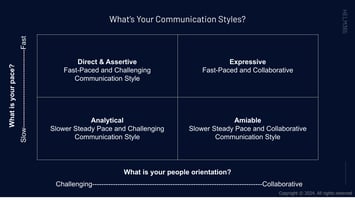
No matter what your default communication style is, awareness of who you are and how you...
Emotional intelligence refers to the ability to recognize, understand, and manage both your own emotions and the emotions of others. Developing emotional intelligence is crucial to becoming an effective and influential leader. Why? By gaining insight into thought patterns and behaviors, leaders can gain a stronger awareness of their strengths and limitations, thus enabling them to make conscious choices about how they lead, fostering greater self-awareness, personal growth, and effectiveness in their leadership roles.
“According to research by organizational psychologist Tasha Eurich, 95% of people think they’re self-aware, but only 10 - 15% actually are, which can pose problems for your employees. Working with colleagues who aren’t self-aware can cut a team’s success in half and, according to Eurich’s research, lead to increased stress and decreased motivation.” ~Tasha Eurich, Working with People Who Aren’t Self-Aware 2018
What does this statistic tell us? Almost everyone can benefit from strengthening their emotional intelligence. For leaders and managers, this is especially true because EQ is vital in establishing strong connections, effective communication, conflict resolution, team inspiration, and making sound decisions. Developing your EQ can feel challenging, requiring self-reflection and confronting uncomfortable truths. Nevertheless, the rewards are significant, as leaders who enhance their EQ witness enhancements in performance, relationships, and long-term achievements. Keep reading to deepen your comprehension and command over your emotions, empowering you to evolve into a more resilient and influential leader.
Leaders who have high EQ's:
- Cultivate an understanding of emotional intelligence (EQ), including self-awareness, social awareness, self-management, and relationship management, and how these components contribute to effective leadership.
- Recognize and understand your emotions, triggers, and their impact on decision-making and interactions.
- Develop strategies to regulate one's own emotions effectively in stressful or challenging situations.
- Empathize with the emotions and perspectives of others, including team members, colleagues, and stakeholders.
- Cultivate curiosity, leveraging active listening to understand different points of view better.
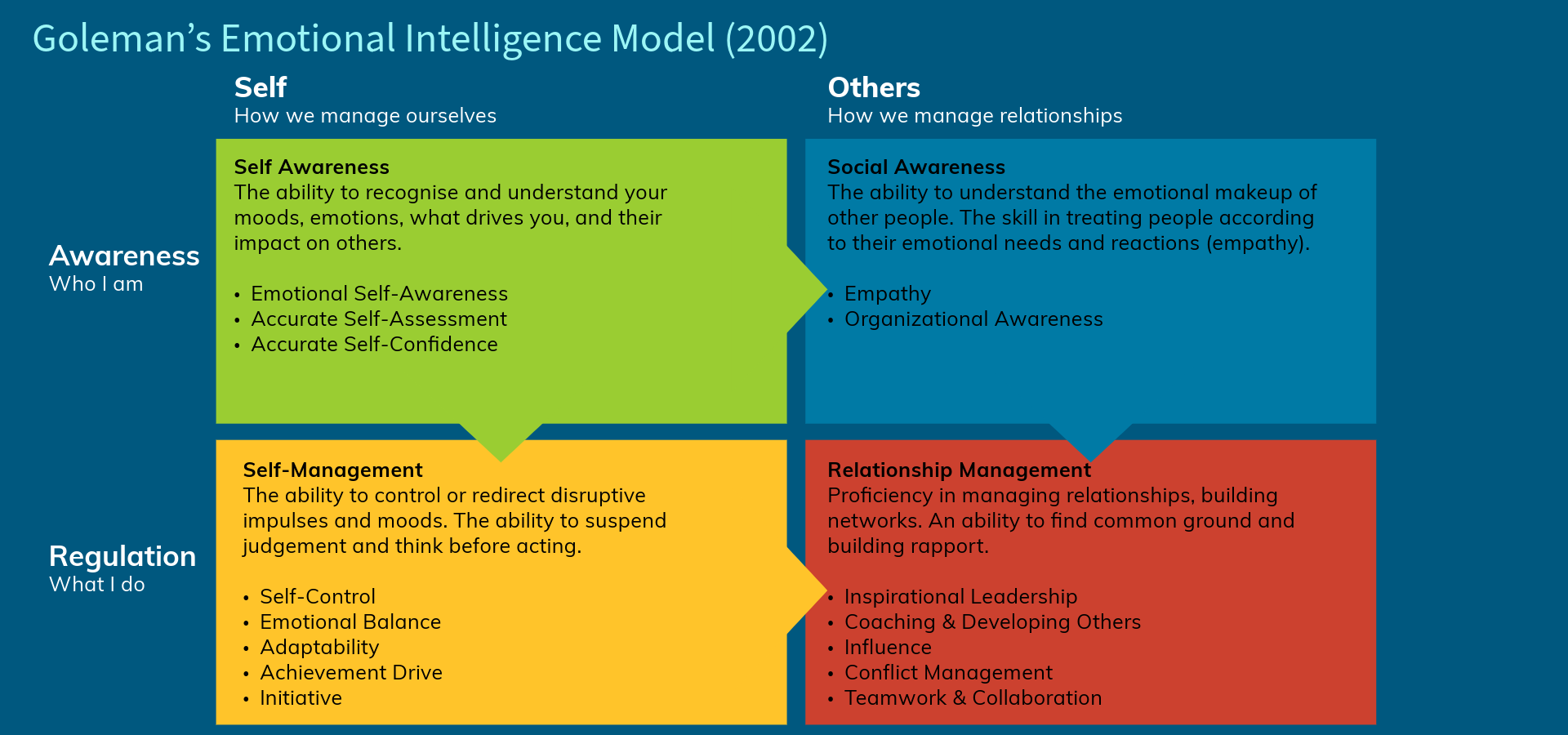
The key to improving your emotional intelligence involves strengthening your self-awareness, self-regulation, motivation, empathy, and ability to form relationships. To support you in strengthening your emotional intelligence, this guide summarizes Daniel Goleman’s Emotional Intelligence (EQ) Theory, which emphasizes the critical role of emotions in personal and professional success. In his research, Golman identified key components of EQ, such as self-awareness, self-regulation, empathy, and social skills, and argued that developing these skills can lead to better outcomes in individual and organizational contexts. Let's take a deeper look at each quadrant of emotional intelligence and how you can take steps to strengthen each.
Self-Awareness
Self-awareness is the foundation of emotional intelligence. It involves understanding your emotions, strengths, weaknesses, and values. By developing self-awareness, you can identify your triggers, manage your reactions, and make conscious choices in leading and interacting with others. What can you do to strengthen this key area of your emotional intelligence?- Practice mindfulness: Set aside time for self-reflection and introspection. Pay attention to your emotions, thoughts, and behaviors in various situations.
- Seek feedback: Ask for honest feedback from trusted colleagues, mentors, or your team members. Their insights can provide valuable perspectives on your strengths and areas for improvement.
Social Awareness
Social awareness involves being attuned to the emotions, needs, and dynamics of the people around you. It helps you navigate interpersonal relationships and build strong connections with your team. What can you do to strengthen this key area of your emotional intelligence?- Practice observation: Pay attention to nonverbal cues, body language, and the team's overall mood. This will help you gauge the emotional climate and respond appropriately.
- Cultivate inclusivity: Foster a culture of inclusivity and respect by valuing and appreciating diversity. Create opportunities for open dialogue and actively seek input from all team members.
Self-Management
Self-management involves effectively regulating and controlling your emotions, impulses, and behaviors. It enables you to respond thoughtfully rather than react impulsively. Self-management skills are crucial for maintaining composure, making rational decisions, and modeling emotional intelligence to your team. What can you do to strengthen this key area of your emotional intelligence?
- Practice emotional regulation: Learn to recognize and manage your emotions. Take deep breaths, take a step back, and give yourself time to respond rather than reacting impulsively.
- Develop resilience: Build the ability to bounce back from setbacks and challenges. Cultivate a positive mindset and seek opportunities for personal growth and learning.
Relationship Management
Relationship management encompasses building and nurturing positive relationships with your team members, stakeholders, and colleagues. It involves effective communication, conflict resolution, and collaboration. What can you do to strengthen this key area of your emotional intelligence?- Foster open communication: Encourage open and honest dialogue within your team. Create a safe space for expressing opinions, ideas, and concerns.
- Conflict resolution: Develop strategies for resolving conflicts in a constructive and respectful manner. Focus on finding win-win solutions and fostering understanding among team members.
Emotional intelligence is a critical leadership skill that can transform you into a stronger and more influential leader. By developing self-awareness, self-management, empathy*, social awareness, and relationship management, you can create a positive work environment, foster collaboration, and inspire your team members. Cultivating emotional intelligence takes time and practice, but the rewards are immeasurable. As a manager, investing in your emotional intelligence will enhance your leadership abilities and contribute to your team's overall success and well-being.
* A brief note on empathy: Empathy is not one of the four quadrants, but leaders must develop. Empathy is the ability to understand and share the feelings of others. It lets you connect with your team members, build trust, and foster collaboration. Demonstrating empathy can create a supportive work environment where individuals feel heard and valued. What can you do to strengthen your empathy?
Coaching Questions To Improve Your Emotional Intelligence
Below is a list of coaching questions to audit your emotional intelligence. As you ask yourself these questions, note for each of your strengths - "What are 2-3 things I do well?" and your challenges - "What are 1-2 things I could do to improve in this area to strengthen my emotional intelligence and better lead my team?"
- How am I staying attuned to my own emotions?
- What situations cause me the most stress?
- What impact does stress have on me?
- What impact does change have on me? How do I adapt to new situations, embrace new ideas, and remain open to different perspectives?
- How do my emotions impact those around me?
- What negative thoughts influence me most during times of stress?
- How am I managing my stress level?
- How do I manage my impulses during times of stress?
- How do I manage my personal resilience in the face of challenges and setbacks?
- How do I stay motivated through challenges?
- How do I build relationships with others? How do I connect with others emotionally, build trust and rapport, and create a positive work environment?
- How am I staying attuned to the emotions of others?
- How do I communicate with others?
- How am I currently managing difficult interactions/conversations with others?
Additional Resources To Strengthen You EQ
- Assess Your Emotional Intelligence.
- Complete this EQ Workbook.
- Struggling with strong emotions? Grab your copy of the Managing Strong Emotions Worksheet here.
- Read over this Guide to Improving Your Active Listening Skills.
- Start a journal to turn your insights into action. Check out these journal prompts to get started.
- Read this article Fast Company: 5 Things Emotionally Intelligent Managers Do Differently
- Listen to this podcast, Hidden Brain: Befriending Your Inner Voice